



Pergola cost UK: What you'll really pay over 10 years

- Aluminium louvred pergolas cost £1,000-£9,000 upfront but need no annual treatment, versus softwood at £300-£800 that requires £80-£150/year in preservative.
- Motorised louvres cost several hundred pounds more than manual, but close in under a minute when rain arrives - the difference between reactive and deliberate use.
- Powder-coated steel footplates corrode within 2-3 years in UK coastal climates, bleeding orange rust onto paving; aluminium avoids this entirely.
- Most residential gardens need the Pergola 4 Pro (motorised, 10-year warranty), not the Pro Max - the Pro Max justifies its premium only for 6 m spans without middle posts.
- Over ten years, softwood replacement costs £1,300-£2,300 cumulatively before buying a new structure; aluminium requires only hose rinses.
What does a pergola actually cost in the UK? The four market tiers in 2026
Most "pergola cost UK" searches return price ranges wide enough to be useless - anywhere from £300 to £30,000, often on the same page. The reason isn't lazy journalism; it's that four genuinely different products share the same name. Here's how the market actually breaks down.
| Tier | Typical 2026 price | What you get | What you give up |
|---|---|---|---|
| Softwood kit | £300-£800 | Fixed-slat timber frame, flat-pack, DIY assembly | Needs annual oiling or treatment; greys and splits within 3-5 years; expect full replacement by year 7-10 |
| Powder-coated steel | £1,500-£4,000 | More rigid than softwood, better weather tolerance | Steel footplates corrode from the ground up - orange rust staining on paving within 2-3 years in wet UK climates |
| Aluminium louvred | £1,000-£9,000 | Adjustable louvres, motorised options, solid aluminium frame, 10-year structural warranty | Higher upfront cost - 4-10× a softwood kit at purchase |
| Architect-specified custom build | £15,000-£30,000+ | Bespoke geometry, full integration with existing architecture, planning-approved design | 6-12 month lead time, significant project management overhead, cost scales sharply with complexity |
The aluminium louvred tier is where most serious buyers end up - and where the numbers deserve the most scrutiny. That £1,000-£9,000 band covers everything from a manual entry-level structure to a fully motorised pergola with Glass Walls and integrated lighting. The gap within the tier matters as much as the gap between tiers.
The upfront cost difference between softwood and aluminium louvred is real. Earning it back is a maths problem - and the answer depends almost entirely on what happens in years three through ten. That's where the next sections focus.
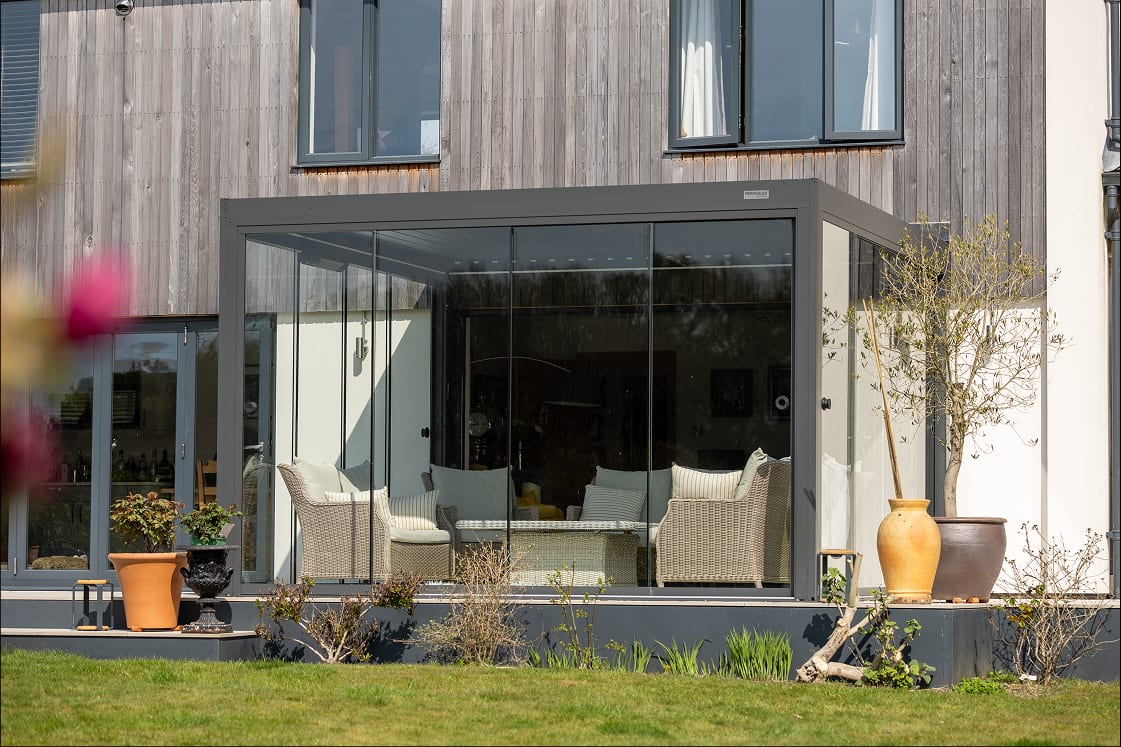
What drives the price gap within the aluminium louvred tier - and which upgrades actually change how often you use the space?
The £1,000-£9,000 range for aluminium louvred pergolas isn't vague marketing - it reflects three real variables: how the louvres operate, how much ground the structure covers, and which accessories you add. Understanding which of those variables changes your behaviour, versus which just changes the look, is where the buying decision actually lives.
Manual vs. motorised louvres is the single biggest price lever in the tier. The Pergola 4 opens and closes by crank - reliable, zero electronics, no electricity supply required. The Pergola 4 Pro adds motorised louvres with app and remote control. That gap runs to several hundred pounds, and in the UK climate it's worth taking seriously: a motorised roof closes in under a minute from your phone when a shower arrives. With a manual system, you weigh the effort against the odds of the rain passing. Most people stay inside. The motorisation isn't a luxury - it's the difference between a space you use reactively and one you use on your own terms.
Span width is the second variable. A 3 × 3 m footprint and a 4 × 6 m footprint are not the same project - the larger configuration requires more structural mass, wider louvres, and a frame engineered for the increased load. The Pergola 4 Pro Max covers a full 6 m span with zero middle posts and is TUV-certified for 450 kg/m² snow load. That's what justifies the Pro Max premium: if your garden genuinely needs an open 6 m span, a Pro Max is the answer. If it doesn't, the Pergola 4 Pro handles most residential footprints at a meaningfully lower price point.
Accessories add cost, but not equally. Glass Walls and Retractable Screens extend the usable season in a way that changes behaviour - a glazed pergola in October is a different room to an open frame in October. Aluminium Slat Walls add definition and privacy; they're a real upgrade, but they don't shift the calendar the way enclosure does in a wet UK climate. Budget for Glass Walls if year-round use is the point. Add Slat Walls once you've lived under the open frame and decided what the space needs.
Most buyers don't need the Pro Max. If your footprint is under 5 m on either side, the Pergola 4 Pro covers it - motorised, warranted for ten years, and built to the same aluminium standard as the top tier.
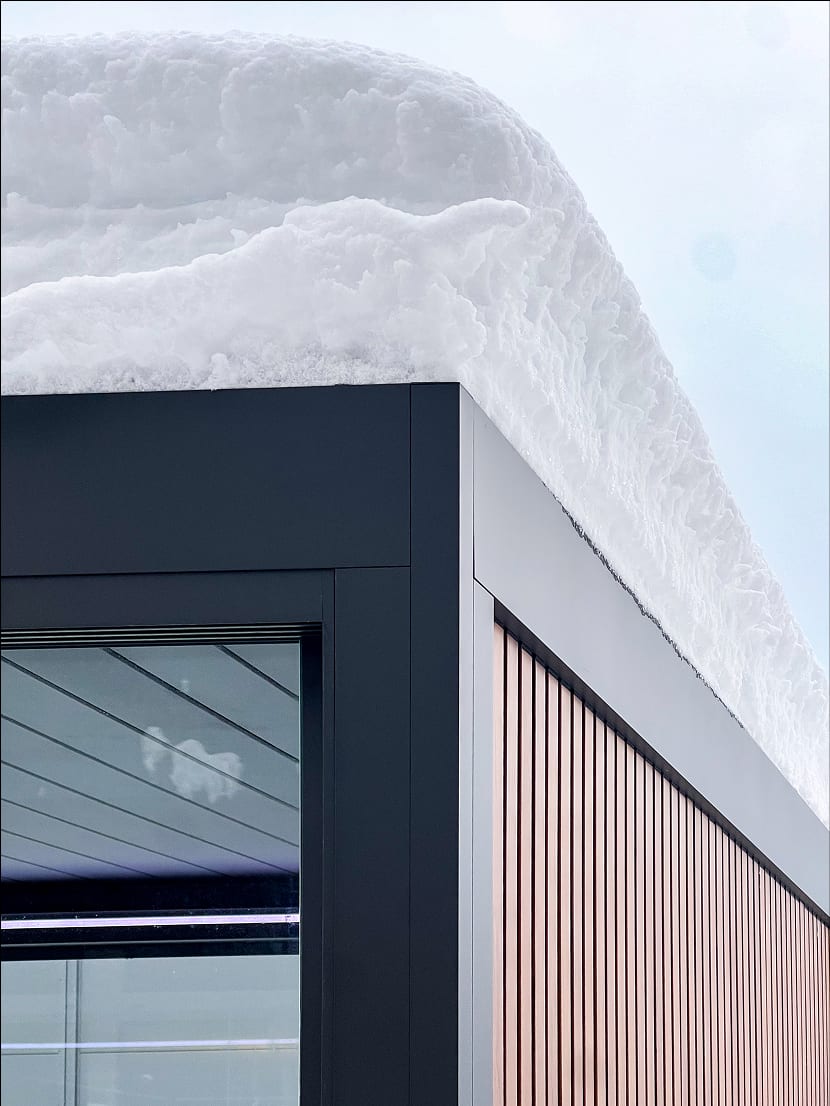
The ten-year cost comparison: what are you actually paying when you add maintenance and lost seasons?
The purchase price is only one number. The honest comparison runs across a decade - and when you fold in treatment, replacement, and the seasons you lose while the structure is rotting, the four tiers land very differently by year seven.
Softwood kits (£300-£800 upfront). Budget around £80-£150 per year for preservative treatment. Miss a year, and the wood begins to grey, split, and absorb moisture. Most softwood pergolas need full replacement between years seven and ten - so that £500 initial outlay becomes £1,300-£2,300 in cumulative spend before you've bought the replacement. And then you buy the replacement.
Powder-coated steel (£1,500-£4,000 upfront). Steel frames look clean in year one. The problem is the footplates. UK conditions - coastal salt spray, freeze-thaw cycling, the persistent damp that Cornwall and Cumbria specialise in - attack exposed steel joints within two to three years. The result is orange rust bleeding onto paving and, eventually, structural movement at the base. Repainting arrests the problem temporarily; it doesn't fix the underlying material choice.
Aluminium louvred (£1,000-£9,000 upfront). No annual treatment. No footplate corrosion. The AkzoNobel powder coating across the Pergola 4 range carries a 100/100 adhesion score, sits at 60-80 microns depth, and is rated Level 4 for colour fastness under UV testing. Maintenance is a garden-hose rinse once or twice a year - not a tin of decking oil and a weekend of your time. The structure is backed by a 10-year warranty. The cost lines cross somewhere around year three; by year seven, the aluminium option is cheaper in total cumulative spend than a softwood kit on its second life cycle.
By year seven, the aluminium option is cheaper in total cumulative spend than a softwood kit on its second life cycle.
There is also the property value dimension. Louvred aluminium pergolas are estimated to add 5-15% to garden-facing property value - a figure supported by how louvred aluminium pergolas affect property value. A softwood structure that's greying by year four adds nothing to a surveyor's assessment. An aluminium-framed, TUV-certified structure integrated into the garden reads as a permanent home improvement.
One variable the ten-year maths cannot capture on its own: you only recoup the cost if you use the space. A pergola you avoid between October and March because it's too exposed, or because opening the louvres manually in horizontal rain feels like a chore, delivers less value per year than the purchase price suggests. That's where motorised louvres and enclosure accessories - covered in the previous section - shift from optional extras to the thing that determines whether the investment closes or doesn't.
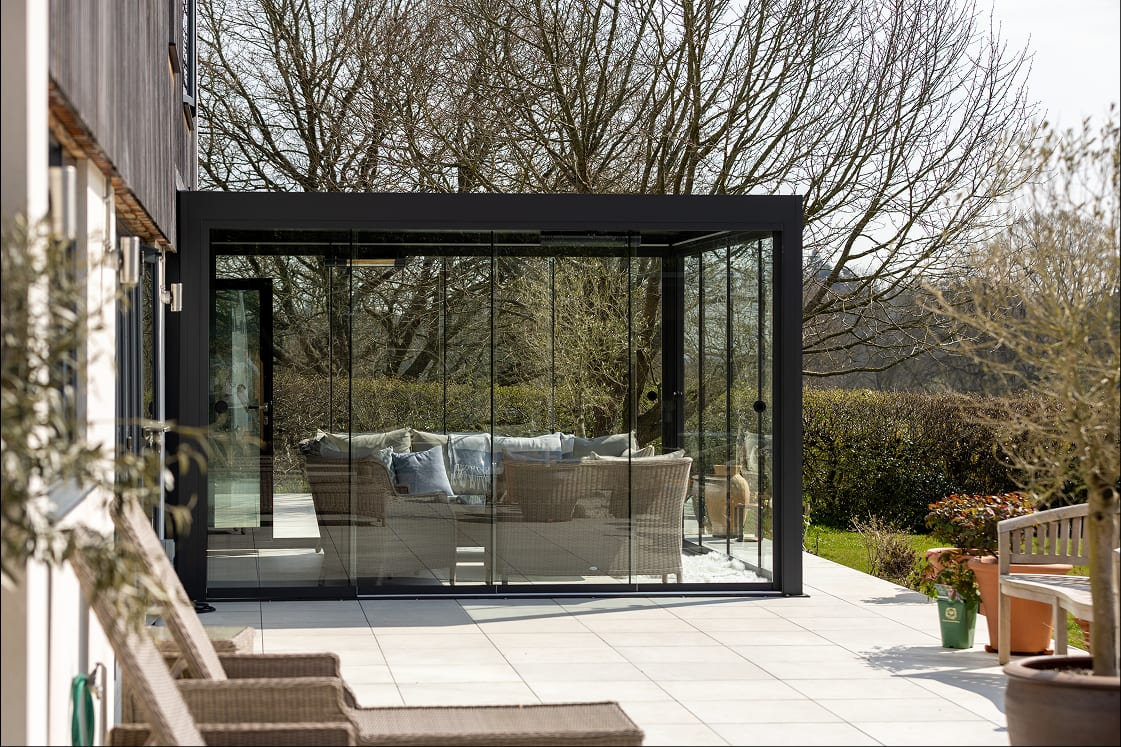
What most online quotes leave out - and how to budget for the full installed cost
Aggregator sites like Checkatrade and Rated People list pergola prices as if the structure arrives, assembles itself, and connects to your electrics by magic. For most UK gardens, the quote you see online is the starting point - not the finish line. Here are the line items that routinely go missing.
- Groundwork and levelling: An unprepared garden - uneven lawn, loose soil, roots near the footprint - adds £300-£800 before a single post goes in. Flat, accessible sites at the lower end; sloped or overgrown gardens at the higher.
- Concrete base: A standard 3×3 m footprint needs a minimum 100 mm slab. Exposed or coastal sites in the UK - Cornwall, the North Sea coast, exposed highland gardens - should go to 150 mm. Budget £150-£400 for a straightforward pour on a standard footprint.
- Electrical supply: Motorised models need power. If there's no existing external socket near the install site, a qualified electrician is a separate line item. Add £200-£500 depending on cable run length and whether a new circuit is required.
- Delivery: Most online quotes exclude delivery. Confirm this before you commit - it varies by postcode and structure size.
- VAT: At 20%, this alone shifts a £4,000 quote to £4,800. Some aggregator prices are ex-VAT; some aren't. Check before comparing.
One configuration variable also gets underweighted in standard quotes: garden shape. A clean rectangle works with a standard model. An L-shaped garden, a narrow terrace with a step change mid-plot, or a footprint wider than 6 m pushes you toward PERGOLUX Custom Design - and custom builds require more planning time than a catalogue order, which changes the budget conversation entirely.
That planning time connects to the one cost buyers rarely think of: delayed use.
The standard PERGOLUX Series 4 line ships in 1-2 weeks. Bespoke installs from architects or fabricators typically run 12-16 weeks. For a buyer planning a 2026 season install, a 14-week delay is roughly 14 weeks of garden sitting unused through late spring and early summer. If cost-per-year is the honest metric, lost weeks of use are a real number - they don't appear in any quote, but they belong in the total.
Back to Blog